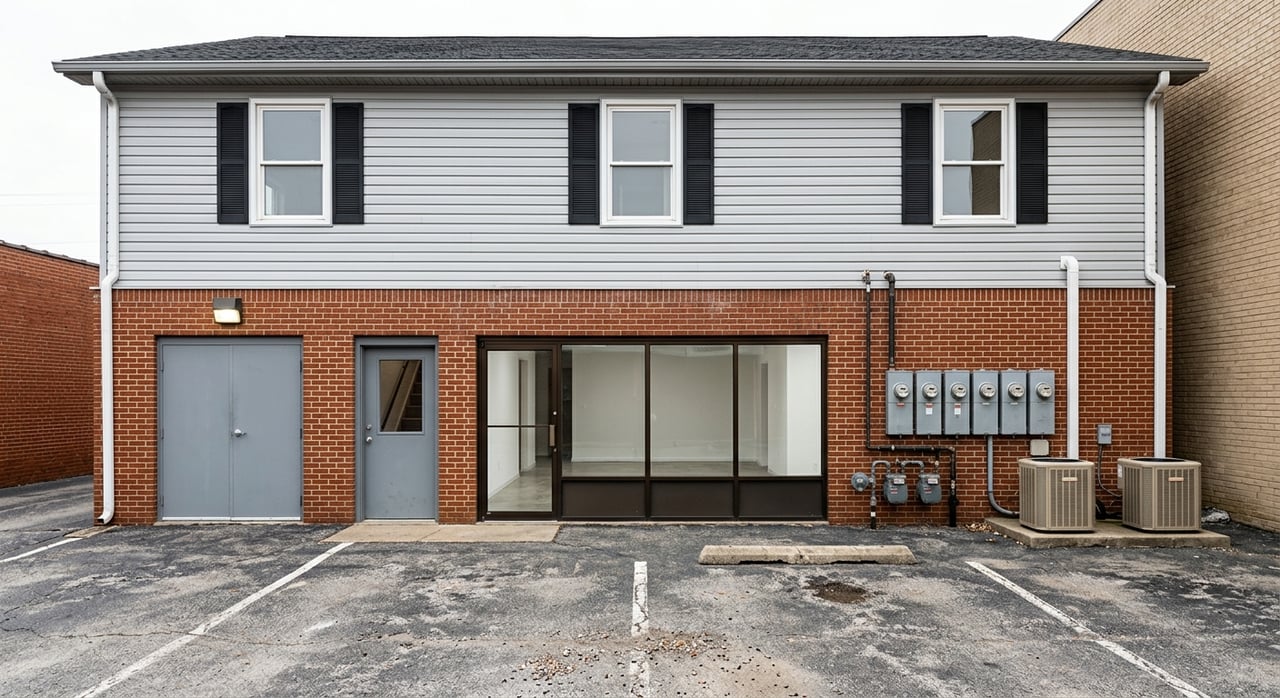
If you are looking at a small commercial or mixed-use property in Stamford, it is easy to get distracted by the headline cap rate and miss what really drives value. In this market, location, transit access, tenant mix, and future use matter just as much as the sticker price. If you want to buy smarter, this guide will help you understand where Stamford stands today, which submarkets deserve the closest look, and how to evaluate a deal with more confidence. Let’s dive in.
Why Stamford Stands Out
Stamford is not just another suburban commercial market. It is a major Fairfield County business center with 135,470 residents, 55,291 households, and a median household income of $111,586 based on Census and ACS figures cited in the city’s reporting. The city also reports that Stamford is home to four Fortune 500 and nine Fortune 1000 companies.
That matters because a broader employment base can support more than one type of commercial demand. Stamford’s major employers include Stamford Health, Charter Communications, NBC Universal, Gartner, Deloitte, Indeed, Synchrony Financial, PwC, and the City of Stamford. For you as a buyer or investor, that creates a more diverse demand base for office, medical office, service retail, hospitality, and mixed-use space.
Transit is another major advantage. The city says the Stamford Transportation Center handles more than 8.5 million riders per year and ranks as the second-busiest Metro-North station after Grand Central. That level of connectivity supports properties that benefit from commuter access, walkability, and steady foot traffic.
Downtown numbers help tell the story. Stamford Downtown reports 53,479 office workers and 56,206 residents within a one-mile radius, about 1.3 million annual visitors, more than 110 bars and restaurants, and retail occupancy above 90%. Those are important signals if you are comparing Stamford with less active suburban markets.
How Stamford’s Submarkets Differ
One of the biggest mistakes you can make is treating all Stamford commercial property as if it performs the same way. It does not. The city’s Stamford 2035 Comprehensive Plan makes that clear by identifying a core mixed-use area, several neighborhood centers, and large residential areas that are intended to stay lower density.
Downtown and the Transportation Center
Downtown and the Transportation Center area remain the clearest fit for transit-oriented investment. This is where the city sees the broadest mix of high-density housing, office, retail, hospitality, and institutional uses. If you are buying a small office building, street retail property, medical office space, or a mixed-use asset, this area deserves strong attention.
Recent market data supports that view. In Q1 2026, Stamford office leasing activity rose 73.4% year over year to 220,218 square feet, vacancy fell to 27.3%, and average asking rents climbed to $41.25 per square foot. Cushman & Wakefield also reported that Stamford’s CBD accounted for more than 80% of the submarket’s occupancy gains.
The split between CBD and non-CBD product is worth noting. In Q2 2025, Stamford CBD vacancy was 23.9% with average asking rents of $48.09 per square foot, while Stamford Non-CBD vacancy was 36.0% with average asking rents of $34.62. That gap shows how much quality and location matter.
South End and Harbor Point
South End and Harbor Point offer a different kind of mixed-use story. Here, residential density, waterfront setting, commuter access, and amenity retail often matter more than traditional daytime office traffic. Stamford Downtown has said it is closely watching Harbor Point properties as part of its retail and business programming.
For you, that means these properties may need to be evaluated through a lifestyle and convenience lens as much as a pure office lens. Ground-floor retail, neighborhood services, and mixed-use formats can make more sense here than a conventional office-only approach.
Neighborhood Centers
The Stamford 2035 plan also identifies mixed-use neighborhood centers such as Springdale, Glenbrook, East Side, West Side, Cove, Waterside, and Bulls Head. These areas may offer smaller-scale opportunities where housing and daily-needs retail can work together. If you are looking for a more local service-based tenant mix, these centers can be worth exploring.
In many cases, these properties are less about big office demand and more about practical, recurring use. Think service retail, neighborhood-facing office, or mixed-use buildings with a stable street presence and straightforward access.
Non-CBD Office Corridors
Older non-CBD office properties may still offer opportunity, but they often require a more careful value-add or conversion thesis. Market reports suggest older office inventory faces more pressure when it lacks the amenities, layout, or parking that tenants now expect. If a building cannot compete well as office space, its future may depend on repositioning.
That possibility is not theoretical. Newmark reported that Fairfield County office inventory began 2025 at 35.4 million square feet, down 1.4 million square feet year over year, and that 4.2 million square feet was proposed or approved for redevelopment by Q2 2025. Stamford examples in that report included 201 Broad Street, 900 Long Ridge Road, 700 Fairfield Avenue, 3 Landmark Square, and 1241 East Main Street.
What to Underwrite Carefully
If you are evaluating a Stamford deal, cap rate alone is not enough. You need to understand how the rent roll, location, expenses, and future flexibility all work together. In this market, a strong underwriting process can help you avoid chasing the wrong building for the wrong reasons.
Review the Rent Roll Closely
Start with the basics, but go deeper than face-value income. Compare in-place rents with what similar space may realistically achieve in the same submarket. A building with below-market rents may offer upside, but only if tenant demand is actually there.
Lease timing also matters. If several leases roll within the next 12 to 36 months, that can either create opportunity or increase risk. The answer depends on the strength of the location, the quality of the space, and the building’s ability to attract renewals or new tenants.
You should also review escalations and expense recoveries with care. Confirm whether rent bumps are fixed or tied to CPI, and verify how taxes, insurance, and common area charges are handled. Small details in lease language can make a real difference to your net operating income.
Watch Tenant Concentration
A single larger tenant can make a property look stable on paper. It can also create meaningful rollover risk if that tenant leaves. In a small commercial building, one departure can reshape the entire cash-flow picture.
That does not automatically make tenant concentration bad. It simply means you should price the risk appropriately and understand how replaceable that income would be in that exact Stamford location.
Budget for Capital Needs
Smaller commercial and mixed-use assets often need more near-term work than buyers first expect. Facades, signage, HVAC systems, storefronts, and common areas can all require capital. If you skip those items in your initial numbers, the deal may look stronger than it really is.
This is especially important in neighborhoods where appearance, visibility, and tenant usability directly affect leasing. A building that looks functional but tired may need investment before it can support stronger rents.
Factor in Parking and Access
In Stamford, parking ratio, walkability, and proximity to the Transportation Center can materially affect both leasing and resale value. A well-located property with practical access may outperform a cheaper alternative in a weaker location. This is one of the clearest cases where the lower purchase price is not always the better value.
Consider Conversion Optionality
Some office buildings no longer compete well in their current form. That does not always mean they lack investment potential. In Stamford, some properties may have value because they offer a believable path to residential or mixed-use repositioning, especially where city planning priorities support flexible use.
Property Taxes Matter in Stamford
Property taxes are not a side note in Connecticut underwriting. They are a meaningful operating expense that can directly affect your returns. Stamford’s FY2025–26 mill rate was set at 27.17 mills, and the city notes that delinquent taxes accrue interest at 1.5% per full or partial month.
For you, the takeaway is simple: model taxes carefully and avoid treating them as a static assumption. In a tight-margin deal, tax expense can shape the difference between a workable acquisition and one that underperforms.
Financing Depends on Your Use
Your financing path in Stamford will depend heavily on whether you plan to occupy the property or hold it purely as an investment. That distinction affects both your loan options and how you should evaluate the building from day one.
SBA Options for Owner-Users
If you plan to operate your business from the property, SBA financing may be relevant. According to the SBA, the 504 loan provides long-term, fixed-rate financing for major fixed assets and can be used to purchase existing buildings or land, with a maximum loan amount of $5.5 million. The SBA also states that 504 loans cannot be used for speculation or investment in rental real estate.
The SBA 7(a) program can also be used to acquire, refinance, or improve real estate and buildings, with a maximum loan amount of $5 million and terms for real estate that can run up to 25 years. For SBA 7(a) owner-occupied commercial real estate, the borrower or operating company must occupy at least 51% of the rentable property. If you are comparing a small office building with a mixed-use property, this occupancy rule matters early.
Conventional Debt for Investors
If you are buying a pure investment property, conventional commercial financing or bridge debt is often more realistic. The reason is straightforward: SBA programs are structured around operating businesses and owner-occupied projects. Investors buying for income need to think more like lenders do, with a clear focus on cash flow, tenancy, and long-term stability.
Newmark reported that Fairfield County lenders remain selective, but capital is available for well-positioned assets with strong cash flow, durable tenancy, and a clear path to stability. The same report noted that financing is favoring properties near transit hubs and urban amenities, which lines up well with Stamford’s strongest locations.
What Strong Stamford Deals Usually Have
The best Stamford acquisitions are rarely generic “commercial buildings for sale.” They are usually stronger because they fit a specific story. The building sits in the right submarket, serves a use with real demand, and offers either current stability or a believable path to improvement.
In practical terms, the most compelling opportunities often share a few traits:
- Transit access or strong everyday accessibility
- A location aligned with Stamford’s long-term land use direction
- Tenant demand that matches the asset type
- Manageable lease rollover and realistic capital needs
- Clear financing fit based on owner-user or investor status
- Flexible use potential when office demand alone is not enough
That is where disciplined local guidance can make a real difference. Stamford has opportunity, but it is not a market where every commercial or mixed-use building should be viewed the same way.
If you are weighing a purchase, sale, or repositioning strategy in Stamford, working with an advisor who understands both commercial deal structure and local market context can help you make a clearer decision. For direct insight on Stamford investment property, mixed-use opportunities, and small commercial strategy, reach out to Robert L Virgulak.
FAQs
What makes Stamford attractive for small commercial investors?
- Stamford offers a diverse employment base, strong transit access, a large downtown worker and resident population, and retail occupancy above 90% in downtown according to Stamford Downtown.
Which Stamford areas are strongest for mixed-use investment?
- Downtown, the Transportation Center area, South End, Harbor Point, and several neighborhood centers identified in the Stamford 2035 plan tend to offer the clearest mixed-use potential.
How should you compare Stamford CBD and non-CBD office property?
- Recent market data shows the CBD has lower vacancy and higher asking rents than non-CBD locations, so you should evaluate non-CBD office more cautiously and often with a value-add or conversion lens.
What underwriting issues matter most in Stamford commercial deals?
- You should closely review in-place versus market rents, lease rollover timing, tenant concentration, expense recoveries, capital reserve needs, parking, access, and possible future conversion potential.
How do Stamford property taxes affect investment returns?
- Stamford’s FY2025–26 mill rate is 27.17 mills, so property taxes can be a meaningful operating expense and should be modeled carefully in your projected NOI.
Can you use SBA financing to buy a Stamford mixed-use building?
- You may be able to use SBA financing if you are an owner-user and meet occupancy rules, but pure investment properties are generally more likely to require conventional commercial or bridge financing.