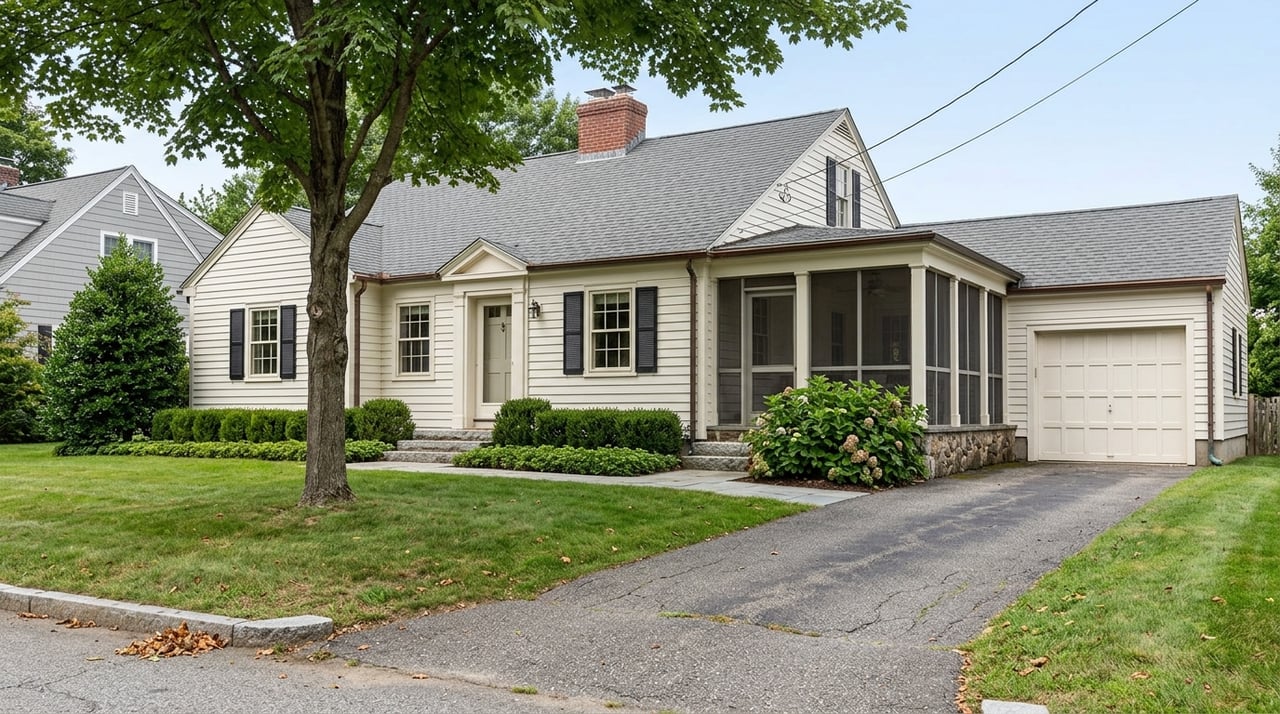
Thinking about selling a historic home in New Canaan? You are not just putting square footage on the market. You are selling a property that may carry architectural significance, town review requirements, and a buyer audience that often looks closely at condition, authenticity, and paperwork. If you want a smoother sale, it helps to understand what makes these homes different before you list. Let’s dive in.
Why Historic Homes Sell Differently
In New Canaan, architecture can be part of the value story. The town has a strong design identity, and it is widely associated with mid-century modern architecture. National Register documentation notes that more than 100 mid-century modern houses were built in town by about 30 architects, which helps explain why design-focused buyers often pay close attention to original details.
That said, not every older or architecturally notable home is regulated in the same way. One of the first things you should confirm is whether your property is located in New Canaan’s local historic district or is simply historically significant in a broader sense. That distinction matters because National Register status alone does not place restrictions on what a private owner may do, while local historic district rules can affect exterior work, demolition, and permits.
If your home is in the local historic district, exterior changes visible from the street may require approval before work begins. In Connecticut, a building permit for exterior alteration or demolition in a historic district cannot be issued until a certificate of appropriateness has been granted. New Canaan’s local regulations add that no work changing the appearance of a property as viewed from the street line may begin until an application is filed and approved.
Confirm Your Property Status Early
Before you make repair plans or write marketing language, verify the home’s designation status. New Canaan states that the official boundaries of the historic district are recorded in the Town Clerk’s office. Checking this early can help you avoid mistakes that may delay your listing or create confusion later.
This step also helps shape how you present the home. If the property is in the local historic district, you can describe that clearly and accurately. If it has architectural significance but no local designation, you can still market its history and design, but you should avoid overstating its legal status.
Gather Records Before Listing
For many historic home sales, documentation matters almost as much as presentation. Buyers often want proof that improvements were permitted, that additions were properly approved, and that the home’s history is understood. A well-organized file can reduce buyer hesitation and make the transaction feel more predictable.
New Canaan’s zoning compliance checklist gives a useful roadmap for what to collect. That includes tax assessment field cards from 1930 to the present, an A-2 survey, zoning permits, building permits, and certificates of occupancy. The town also notes that field cards older than 1965 are stored at the New Canaan Historical Society.
If you have records of restoration work, architect information, older photographs, or renovation timelines, keep those organized too. Buyers of distinctive homes often respond well to a clear paper trail. In many cases, strong documentation does more to support value than cosmetic updates alone.
Know When Approval May Be Needed
If you are thinking about doing exterior work before listing, plan ahead. New Canaan recommends a pre-application meeting for proposed work, and complete applications for a certificate of appropriateness should be filed at least two weeks before a regular commission meeting. The town also discourages piecemeal filings, so one complete submission is often more efficient than several smaller ones.
Historic review may not be the only layer of approval. New Canaan notes that work on properties in the historic district may also require permits or licenses from the Building Department, Planning and Zoning, Inland Wetlands, Health, Public Works, or other town and state agencies. In other words, even a well-intended pre-listing project can involve more coordination than sellers expect.
It is also important not to assume every repair is exempt. New Canaan says the commission decides whether maintenance or repair is truly exempt. The town lists examples that generally do not require commission action, such as interior alterations, work not visible from a public street, painting and paint color, and matching masonry or roof repairs.
Present the Home’s Character Clearly
Historic homes usually perform best when the marketing highlights what makes them hard to replace. In New Canaan, that may include original windows, millwork, fireplaces, built-ins, stonework, rooflines, and the relationship between the house and its site. These details often matter to buyers who are specifically searching for architectural character.
For photography and staging, the safest approach is usually to emphasize the home’s defining features rather than trying to erase its age. New Canaan’s preservation framework favors retaining distinctive materials and features, and buyers drawn to these properties often want to see that authenticity. Clean, polished presentation still matters, but the goal is clarity, not overcorrection.
Your listing narrative should also be factual and specific. If known, include the home’s era, architect, original materials, what has been restored, what has been added, and whether major work was permitted. Precision builds trust, especially when buyers are evaluating a home with more history and complexity than a typical listing.
Price With Condition and Provenance in Mind
New Canaan remains a premium market. In June 2026, Realtor.com reported a median listing price of $2.8 million and median days on market of 24, with homes selling for about asking on average. That kind of market supports strong pricing, but it does not eliminate buyer scrutiny.
Historic and architecturally significant homes should be priced against the right comparables. A preserved antique, an intact mid-century modern house, and a heavily remodeled older home may all have similar size, but they are not interchangeable if buyers value authenticity. Condition, provenance, and permit history can all influence how buyers respond.
This is where a documentation-driven pricing strategy becomes important. If your home has preserved original features, documented restorations, and a clean permit trail, that can support confidence at a premium price point. If there is deferred maintenance, unclear approvals, or later alterations that do not fit the original character, buyers may discount for that risk.
Expect More Buyer Due Diligence
Older homes often bring more questions, and historic homes usually bring even more. Buyers may look closely at prior renovations, permits, system updates, exterior changes, and the condition of original materials. That does not mean the home is harder to sell, but it does mean preparation matters.
In many cases, buyers are reassured more by complete records than by last-minute cosmetic improvements. If you can show permits, certificates of occupancy, surveys, and a clear history of work, the transaction often feels more manageable. That clarity can help prevent renegotiation later in the process.
If the home is pre-1978, lead-based paint disclosure should be handled as a standard part of the sale file. Sellers of most pre-1978 housing must disclose known lead-based paint information before the sale contract is signed, provide available records, and allow buyers time for a lead inspection or risk assessment. Having this ready early helps keep the process moving.
Build Extra Time Into the Timeline
If exterior work still needs to be completed before closing, give yourself more runway. Connecticut law requires a certificate of appropriateness before a building or demolition permit can be issued in a historic district. New Canaan’s regulations also require a public hearing on applications unless the item is not subject to approval, and the commission must act within 65 days of filing.
That timeline can affect when you photograph, launch, negotiate, and close. If approval is granted, the commission may attach conditions and can request an as-built drawing or survey to confirm compliance. Sellers who keep contractors, architects, and surveyors aligned are usually in a better position to avoid avoidable delays.
For many owners, the most efficient path is to prepare well before listing. If you are planning to sell within the next 12 to 24 months, verify the designation status, reconcile permit history, gather town records, and decide whether any exterior work needs review before the property is photographed or marketed. That sequence can reduce surprises and make the eventual sale more straightforward.
What Buyers Want to See
In a market like New Canaan, buyers of historic homes are often balancing emotion with caution. They may love the architecture, the craftsmanship, or the design pedigree, but they still want a clear understanding of what they are buying. The strongest sale story is usually the clearest one.
That means preserving the home’s character, documenting the work, pricing to actual condition, and disclosing the rules that govern the property. When you do that well, you give buyers fewer reasons to hesitate. You also put yourself in a stronger position when offers come in.
Selling a historic home in New Canaan takes more planning than a standard listing, but it can also create a compelling market story when handled correctly. If you want guidance on pricing, presentation, and preparing the right documentation before you go live, Robert L Virgulak can help you map out a smart next step.
FAQs
What makes selling a historic home in New Canaan different?
- Historic home sales in New Canaan often involve more documentation, more buyer due diligence, and possible review requirements for exterior work if the property is in the local historic district.
How do you verify if a New Canaan home is in the local historic district?
- New Canaan states that the official historic district boundaries are on file in the Town Clerk’s office, so you should confirm your parcel status there before planning work or marketing the home.
Do New Canaan historic homes need approval for exterior changes?
- If a home is in the local historic district, exterior changes visible from the street may require a certificate of appropriateness before work begins and before certain permits can be issued.
What records should you gather before listing a historic home in New Canaan?
- A strong pre-listing file can include tax assessment field cards, an A-2 survey, zoning permits, building permits, certificates of occupancy, and any available records of restoration or renovation work.
How should you price a historic home in New Canaan?
- Pricing should consider not just size and location, but also architectural character, condition, preserved original features, provenance, and whether past improvements were properly permitted.
Do sellers of older homes in New Canaan need lead paint disclosure?
- If the home is pre-1978, sellers of most housing must disclose known lead-based paint information, provide available records, and allow buyers time for a lead inspection or risk assessment.