The closing binder for a Norwalk waterfront condo is thicker than most buyers expect. Somewhere between the deed and the loan documents sits a stack that rarely gets more than a skim: the flood zone determination, the HOA's master policy declarations, and a page from the city's zoning file that most agents never mention until it matters. Buyers tend to assume the flood zone letter is the whole insurance story. It isn't. Two units in two different buildings, priced within a few thousand dollars of each other and sitting in the same flood zone, can carry meaningfully different annual insurance costs once you factor in what each building's master policy actually covers and what the city will let a future owner renovate before triggering a much bigger compliance project.
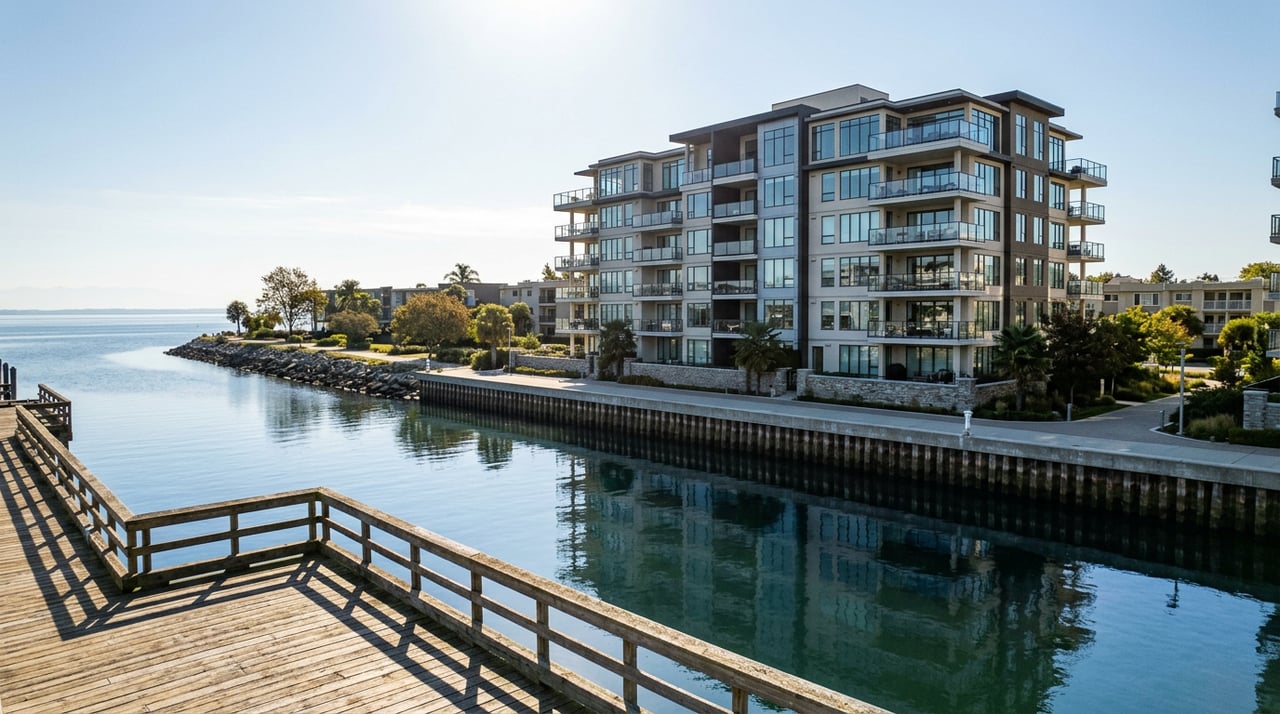
This matters more in Norwalk than it does in most Fairfield County towns, because Norwalk's waterfront condo stock is genuinely varied. You have eight-story mid-rises like The Maritime in South Norwalk, an award-winning-architect building completed in 2007 with 61 units. You have older low-rise communities like Harborview on Cove Avenue, 15 units built in 1987 with their own marina and 36-foot deep-water docks. You have Silver Ridge, Riverway, Marquis on the River, Dorlon Terrace, and SONO Pearl scattered along the harbor and the Norwalk River. Each of these buildings sits in some flavor of flood hazard zone. None of them handle the paperwork the same way.
The Flood Zone Letter Is Real, But It Isn't the Whole Answer
FEMA's flood zone designation for a Norwalk property comes from the Flood Insurance Rate Map for Fairfield County, and it determines whether a lender requires flood insurance at all. Norwalk's zoning code treats Zones A, AE, AO, AH, Coastal AE, and VE as areas of special flood hazard, with VE and Coastal AE singled out as coastal high-hazard zones because of wave action, not just standing water. That distinction shows up directly in premium cost. A property in a VE zone, where waves are expected to hit the structure directly, is priced by insurers well above a comparable unit in an AE zone a few blocks inland along the same river.
The zone letter tells a buyer whether coverage is mandatory. It does not tell them how much of the building's exposure is already handled by the association, and that second question is where the real cost variation lives.
The Document That Actually Sets Your Bill
Every condo association carries a master insurance policy, and Connecticut condo law does not force every association to write it the same way. Master policies generally fall into one of three structures, and the difference between them determines how much a unit owner has to insure separately through their own HO-6 policy.
| Master Policy Type | What the Association's Policy Covers | What You Still Have to Insure |
|---|---|---|
| Bare walls | Building structure up to the unfinished interior wall surface | Flooring, drywall, cabinets, fixtures, all interior finishes |
| Single entity | Structure plus original builder-installed finishes | Upgrades and improvements made after the unit was built |
| All-in | Structure plus nearly all interior finishes as they currently exist | Personal property, betterments, and liability |
None of these categories are printed on a listing sheet. They live in the association's recorded declaration, and the only way to know which one a given Norwalk building carries is to request the master policy declarations page during attorney review and read it against the HOA bylaws. A bare-walls building means the unit owner is on the hook for a full interior rebuild if a pipe fails or a storm gets in, and that changes the HO-6 dwelling coverage a buyer actually needs, sometimes by tens of thousands of dollars in coverage limits. Flood coverage in particular is almost never part of the master policy regardless of which category it falls into, which means every unit owner in a flood zone building needs a separate flood policy no matter how the association writes its own coverage.
The Renovation Ceiling Buried in Norwalk's Code
Here is the piece that catches people who plan to buy now and renovate later. Norwalk's zoning regulations define a "substantial improvement" as any repair, reconstruction, or improvement to a structure where the cumulative cost over a rolling five-year period reaches 25 percent of the structure's market value, as determined by the Norwalk Tax Assessor's records. The city tracks this cumulatively, whether or not a given piece of work required a zoning permit, and the clock is tied to the structure itself, not to the current owner. If a seller already put work into the unit within the last five years, some of that 25 percent budget may already be spent, and the new owner inherits whatever is left on the clock.
Once a property crosses that threshold, it has to be brought into full flood compliance before any further improvement work can proceed, which for an older building can mean elevation changes, flood-resistant materials below the base flood elevation, or a certified Elevation Certificate from a Connecticut-licensed land surveyor. This rule sits in Article 6 of Norwalk's zoning regulations, and it applies regardless of whether the unit is a house on Rowayton's shoreline or a condo in a converted SoNo warehouse. A buyer who plans a kitchen gut and a bathroom addition inside three years of closing should ask what percentage of that 25 percent has already been used, not assume they're starting from zero.
Why Norwalk's Flood Bill Often Runs Higher Than Stamford's
A flood insurance brokerage that compiled NFIP policy-count data by Connecticut town found, in a tally from late 2025, that Norwalk carried roughly 2,089 active NFIP flood policies paying a combined total that worked out to an average premium near $1,678. Stamford, a few miles down the same coastline, showed roughly 2,585 policies averaging closer to $992. That gap is not random. It reflects the difference in building stock and shoreline exposure between the two cities: Norwalk's waterfront inventory leans older, with more direct harbor and Sound frontage in places like SoNo and East Norwalk, while a larger share of Stamford's waterfront development sits on more protected inner-harbor parcels or in newer construction built to current elevation standards. For a buyer comparing a unit in Norwalk against one in Stamford at a similar price point, the flood premium difference is a real cost to model into the comparison, not a rounding error.
Norwalk does participate in FEMA's Community Rating System, which gives residents a discount on flood premiums tied to the city's flood mitigation work, so the gap is not fixed. It moves as the city's mitigation credit and each building's individual elevation data change.
What to Pull Before You Waive the Contingency
A buyer who is close to signing on a Norwalk waterfront condo has a short, specific list worth working through before removing the inspection or insurance contingency:
- Request the HOA master policy declarations page and confirm in writing whether it is bare walls, single entity, or all-in.
- Ask the association or management company how much of the building's rolling five-year substantial improvement budget, if any, has already been used on the specific unit.
- Pull the FEMA flood zone designation for the exact address, not just the neighborhood, since AE and VE zones can sit blocks apart along the same river.
- Get a flood insurance quote from both the NFIP and at least one private carrier before closing, since Connecticut law allows private flood coverage as an alternative to the federal program and pricing between the two can diverge.
- Confirm whether the unit has ever had an Elevation Certificate completed, since that document affects both compliance status and premium calculation.
None of this changes the sale price. All of it changes the true annual cost of owning the unit, which is the number that actually matters five years in.
FAQ
If I want to renovate after closing, does my five-year clock start over? No. Norwalk tracks the 25 percent substantial improvement threshold cumulatively over a rolling five-year window tied to the structure, not to a change in ownership. A buyer should ask what work has already occurred on the unit in the past five years before budgeting a renovation.
Am I required to buy flood insurance through the NFIP specifically? No. Connecticut allows private flood insurance as an alternative or supplement to a National Flood Insurance Program policy, and pricing between the two can differ meaningfully depending on the building's elevation and construction.
Does the flood zone letter I get during inspection settle the insurance question? It settles whether flood insurance is required by the lender. It does not tell you what the HOA's master policy already covers or how much separate HO-6 dwelling coverage you need, which is a building-by-building answer found in the association's declarations, not the FEMA map.
Waterfront paperwork in Norwalk rewards buyers who read past the flood zone line before they waive a contingency. If you are evaluating a specific building along the harbor or the Norwalk River and want a read on its master policy structure, its improvement history, or how its premiums compare to a similar unit in Stamford or Rowayton, Bob Virgulak can walk through the actual documents with you before you're locked into a decision.